Best Restaurant AI Tools: Complete Guide to AI Discovery Platforms
2026-05-16
Restaurant AI discovery tools help establishments get cited and recommended by AI assistants like ChatGPT, Claude, and Perplexity. The leading platforms focus on creating AI-readable content formats, optimizing business listings for AI consumption, and tracking when restaurants get mentioned in AI responses across different platforms.
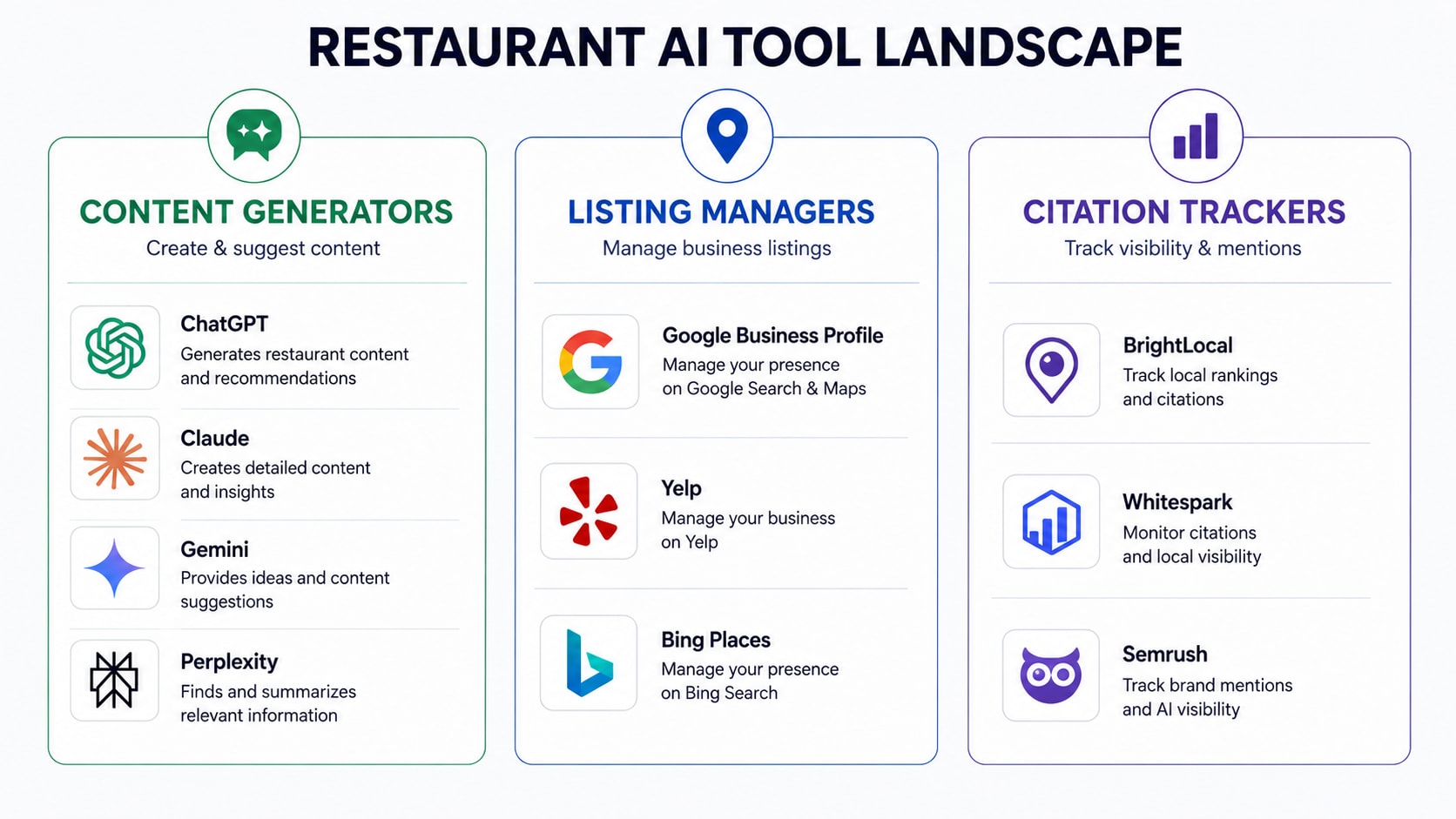
The restaurant AI tool landscape splits into three categories: AI-readable menu generators, business listing optimizers, and citation tracking platforms. Most restaurants need a combination approach rather than relying on a single tool, since AI discovery requires both structured data and broad online visibility.
What types of AI tools do restaurants actually need?
Restaurant AI tools serve three primary functions, each addressing different aspects of AI discovery. Understanding these categories helps restaurant owners choose the right combination rather than expecting one tool to solve every challenge.
AI-readable content generators create structured files that AI systems can easily parse and understand. These tools format menu information, restaurant details, and key facts in ways that ChatGPT and similar platforms can quickly extract and cite.
Business listing management platforms ensure restaurant information appears accurately across directories, review sites, and search engines that feed into AI training data. Consistent, up-to-date listings increase the likelihood that AI systems will recommend your restaurant confidently.
AI citation tracking tools monitor when and how restaurants get mentioned across different AI platforms. These help owners understand which queries trigger recommendations and how AI systems describe their establishment.
Local SEO optimization platforms focus on geographic discovery, ensuring restaurants appear in location-based queries that increasingly power AI recommendations for nearby dining options.
How do AI-readable menu generators work?
AI-readable menu generators transform standard restaurant information into formats specifically designed for AI consumption. The most effective tools create llms.txt files — structured text documents that AI systems can quickly scan and understand.
LLMenu specializes in creating these AI-readable files for restaurants. The platform takes menu PDFs, website content, or manually-entered information and generates llms.txt files that include menu items, prices, specialties, atmosphere, and key details formatted for optimal AI parsing.
Key features that matter: automated menu extraction from existing documents, customizable formatting for different AI platforms, integration with website hosting, and the ability to update information easily as menus change.
Setup process: Most tools require uploading current menu documents, verifying extracted information for accuracy, customizing the restaurant description and atmosphere details, then hosting the generated file where AI systems can access it.
The goal isn't just creating structured data — it's ensuring that data accurately represents what makes your restaurant distinctive when AI systems need to choose between multiple options for user queries.
Which business listing platforms best serve AI discovery?
Business listing management becomes crucial for AI discovery because AI systems draw heavily from search engines and directory data when making recommendations. The platforms that work best for AI discovery prioritize data consistency and broad distribution.
Google Business Profile optimization remains essential since ChatGPT with live search often pulls from Google's business data. Accurate hours, current photos, menu highlights, and regular posts signal to AI systems that your restaurant is active and well-maintained.
Yelp and review platform management influences AI recommendations since many AI systems incorporate review data into their understanding of restaurant quality and characteristics. Tools that help maintain current information across multiple review platforms create more comprehensive AI-readable profiles.
Directory syndication services ensure restaurant information appears consistently across the dozens of business directories that feed into AI training data. Small inconsistencies across platforms can confuse AI systems about basic facts like hours or location.
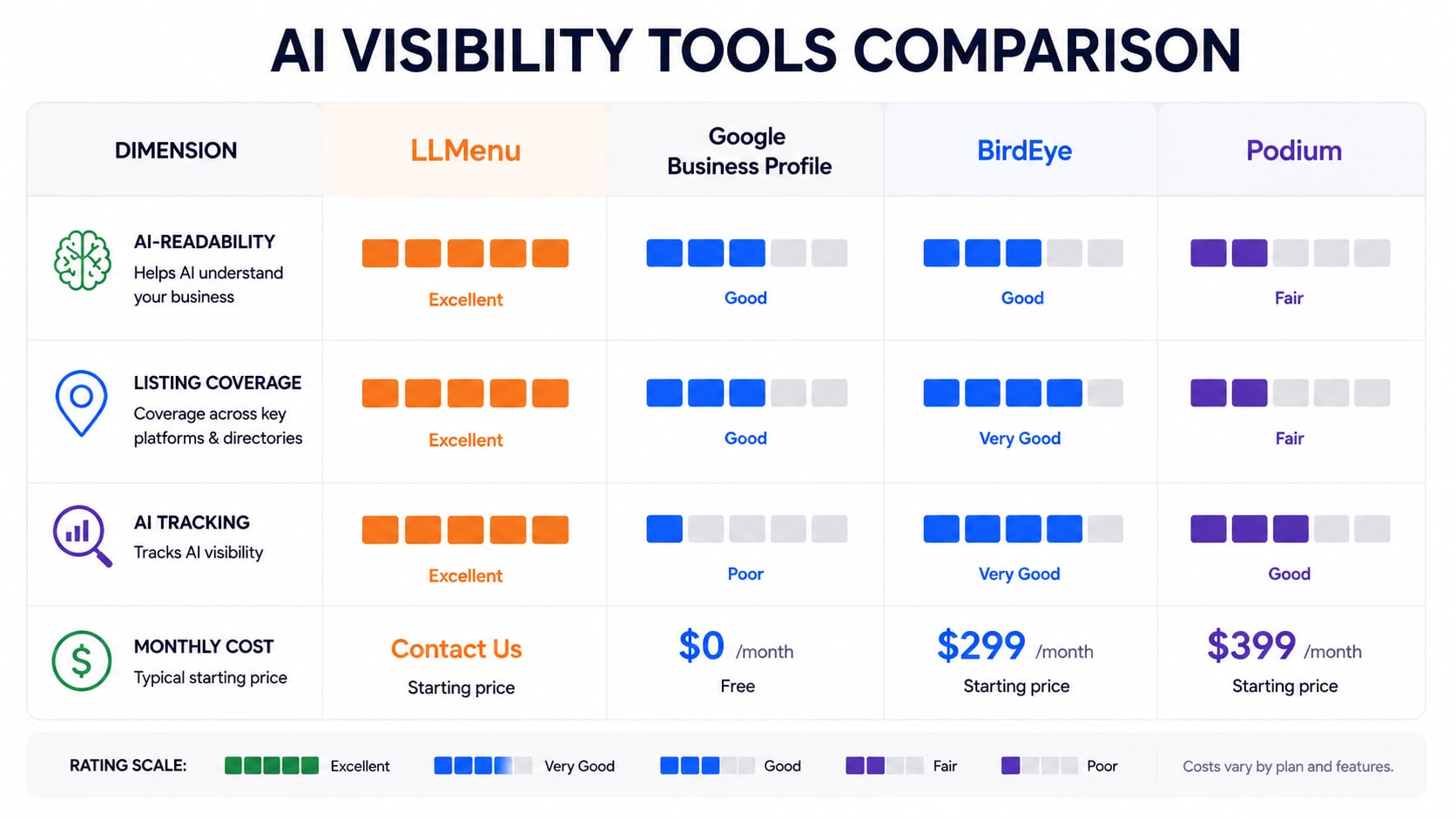
Local SEO platforms like BirdEye, Podium, or LocaliQ offer broader business listing management that covers many of the directories AI systems reference, though they're not specifically designed for AI discovery.
| Tool | Best For | Starting Price | Key AI Feature |
|---|---|---|---|
| LLMenu | AI-readable files | Contact for pricing | Direct llms.txt creation |
| Google Business Profile | Search visibility | Free | Live search integration |
| BirdEye | Review management | $299/month | Multi-platform consistency |
| Podium | Customer messaging | $399/month | Unified business data |
What should you look for in AI citation tracking?
AI citation tracking helps restaurants understand when and how they get recommended by different AI platforms, but the tools available for this are still developing as the field grows.
Platform coverage matters most. Effective tracking should monitor ChatGPT, Claude, Perplexity, Gemini, and other major AI assistants since different platforms have different recommendation patterns and data sources.
Query context provides actionable feedback. The best tracking tools don't just tell you when your restaurant was mentioned — they show what questions prompted the recommendation, helping you understand which aspects of your restaurant AI systems find most notable.
Geographic and cuisine tracking helps restaurants understand whether they're getting recommended for local queries, specific cuisines, or particular occasions. This information guides optimization efforts.
Competitive analysis features show how often similar restaurants in your area get cited, providing context for your own AI visibility and suggesting opportunities for improvement.
Most comprehensive AI citation tracking is still handled by specialized analytics companies rather than self-service tools, since monitoring across multiple AI platforms requires significant technical infrastructure.
How do these tools integrate with existing restaurant operations?
The most effective restaurant AI tools integrate smoothly with existing workflows rather than requiring entirely new processes. Integration capabilities often determine whether restaurants actually use these tools consistently.
POS system integration allows AI-readable content to stay current automatically as menu items and prices change. Tools that connect with Square, Toast, or other popular POS systems reduce the manual work of keeping AI-visible information accurate.
Website integration ensures AI-readable files are properly hosted and accessible to AI systems. Many tools provide simple hosting options or integrate with common website platforms used by restaurants.
Social media and review platform connections help maintain consistent information across all channels that contribute to AI understanding of your restaurant. Tools that sync basic information across platforms prevent the inconsistencies that confuse AI systems.
Staff training requirements vary significantly between tools. The best options require minimal training since restaurant staff typically have limited time for learning new systems.
The goal is making AI discovery an automatic part of restaurant operations rather than an additional task that competes with serving customers.
What does effective AI optimization cost restaurants?
Restaurant AI tool pricing ranges from free basic options to comprehensive platforms costing several hundred dollars monthly. Understanding cost structures helps restaurants budget appropriately and choose tools that deliver clear value.
Free options like Google Business Profile provide essential AI discovery benefits but require manual management and don't create specialized AI-readable formats. These work for basic AI visibility but miss opportunities for more sophisticated discovery.
Mid-range specialized tools typically cost $50-200 monthly and focus on specific aspects of AI discovery. LLMenu and similar platforms in this range create AI-readable content but may not include broader business listing management.
Comprehensive platforms costing $300+ monthly usually combine AI-readable content generation, business listing management, review monitoring, and basic citation tracking. These work best for restaurant groups or establishments with significant online marketing budgets.
Setup and maintenance costs vary by tool complexity. Simple AI-readable file generators may require only initial setup, while comprehensive platforms need ongoing management to maximize value.
Most restaurants see positive return on AI tool investment within 3-6 months if the tools actually increase AI citations and drive measurable foot traffic from AI recommendations.
Getting started with restaurant AI discovery
Start with the foundation tools that provide the biggest impact for minimal cost and complexity. Most restaurants benefit from a phased approach rather than implementing multiple AI tools simultaneously.
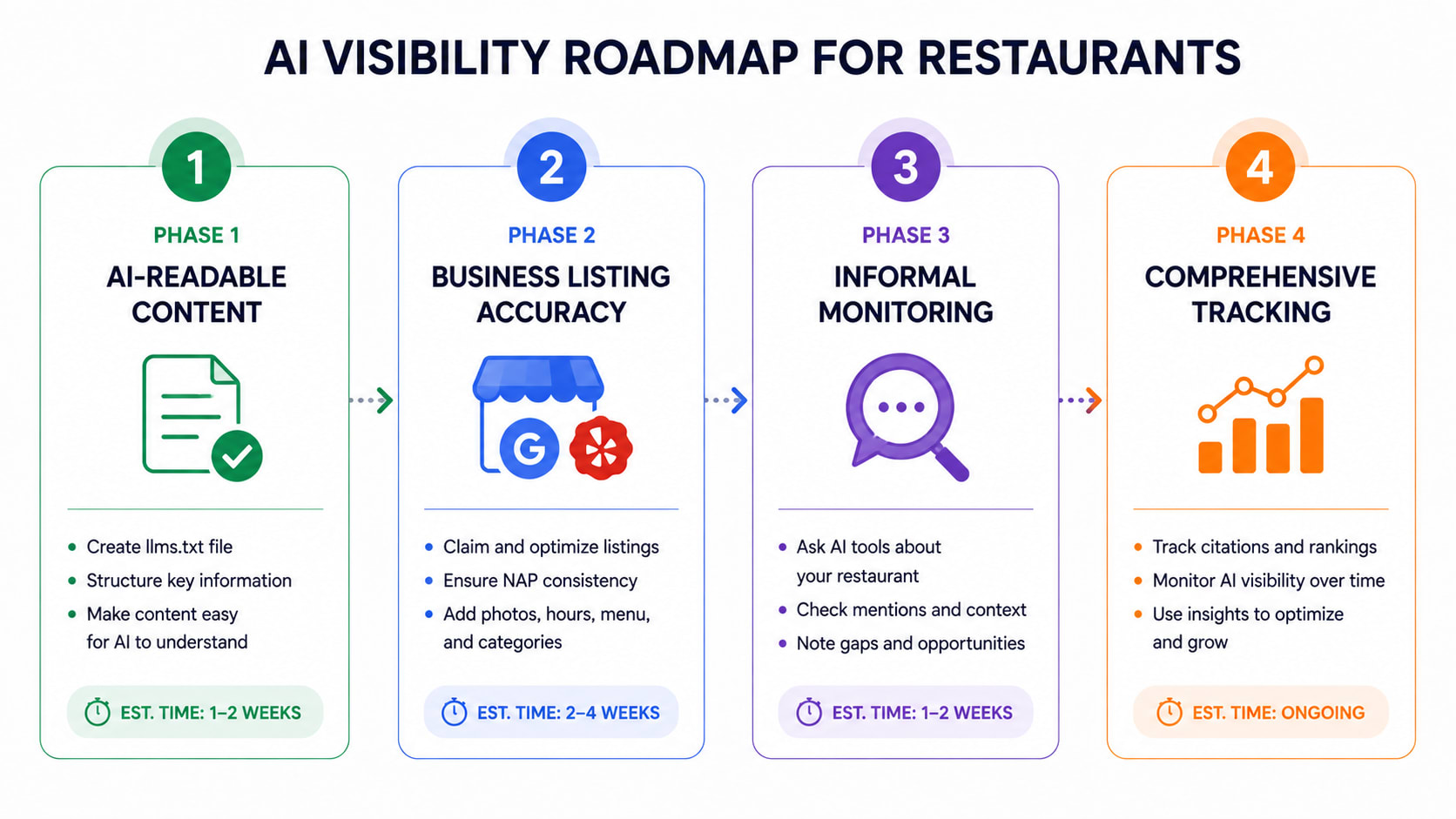
Phase one: AI-readable content. Create an llms.txt file with LLMenu or build one manually. This single step makes your restaurant discoverable by AI systems that specifically look for structured restaurant data.
Phase two: Business listing accuracy. Audit and update your Google Business Profile, Yelp listing, and other major directories where AI systems source restaurant information. Ensure consistency across platforms.
Phase three: Monitoring and optimization. Begin tracking AI citations informally by periodically asking ChatGPT and other AI systems for restaurant recommendations in your area. Note when your restaurant appears and in what context.
Phase four: Comprehensive tracking. Invest in formal citation tracking and advanced optimization tools once you have baseline AI visibility and understand which approaches work best for your specific restaurant and location.
The most successful restaurant AI strategies focus on accuracy and consistency rather than trying to game AI systems. AI platforms increasingly favor authentic, well-maintained business information over attempts to manipulate recommendations.