How to Get Your Restaurant on ChatGPT: Complete Setup Guide
2026-05-16
Getting your restaurant recommended by ChatGPT requires creating AI-readable content, maintaining accurate business listings, and ensuring your restaurant appears in the search results that ChatGPT uses for live recommendations. The process combines traditional SEO with new AI-specific optimization techniques, but most restaurants can implement the essentials in a few hours of focused work.
ChatGPT finds restaurants through two primary mechanisms: its training data (information learned during development) and live search integration (current web results). Your optimization strategy needs to address both pathways to maximize recommendation likelihood.
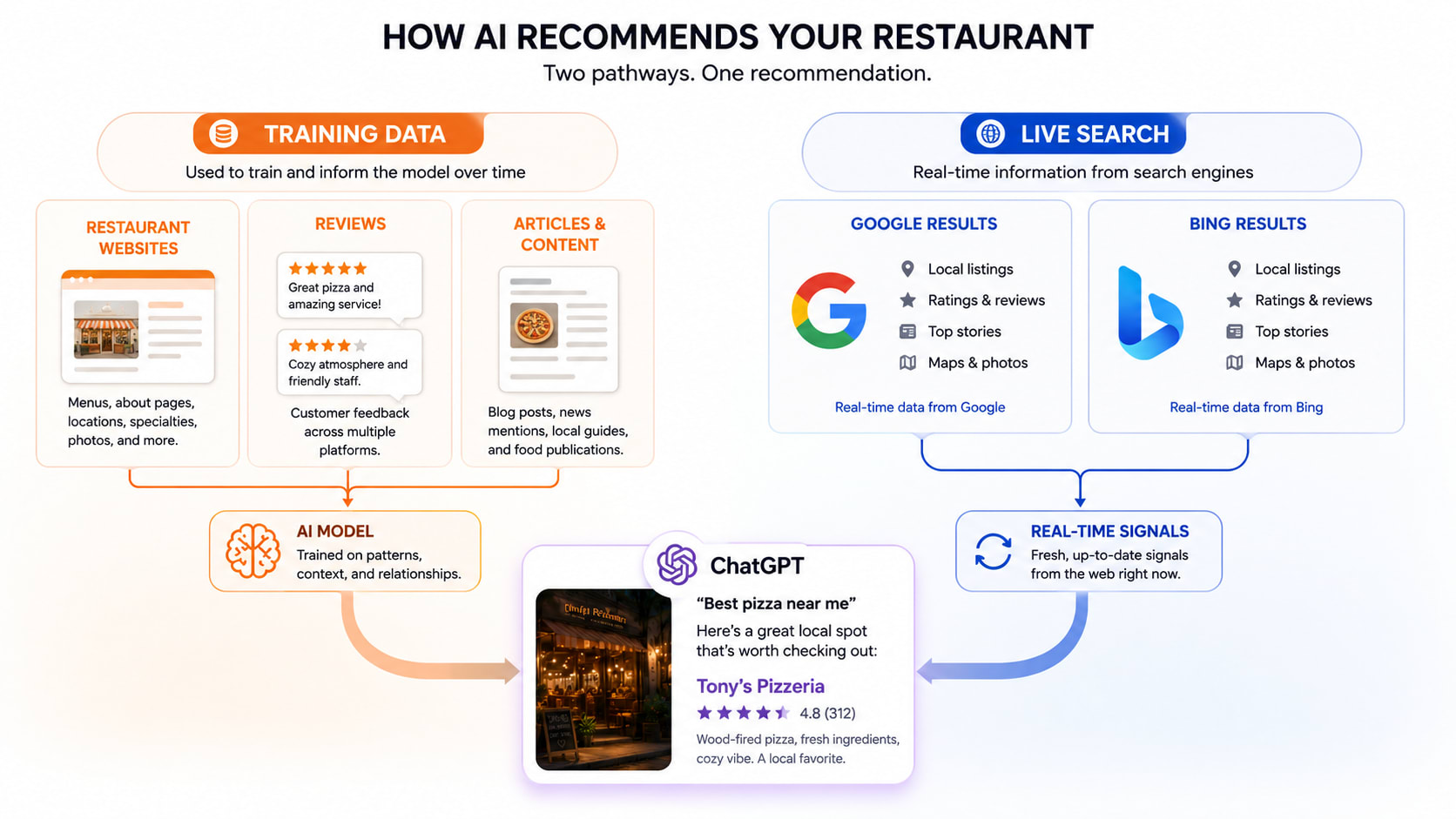
What information does ChatGPT need about your restaurant?
ChatGPT requires structured, accessible information to recommend your restaurant accurately and confidently. The AI needs more than just knowing your restaurant exists — it needs context about when and why to suggest your establishment.
Basic business information forms the foundation: restaurant name, exact location, cuisine type, price range, and hours. This data must be consistent across all platforms where ChatGPT might encounter it.
Distinctive characteristics help ChatGPT understand when your restaurant fits specific user queries. Signature dishes, unique atmosphere elements, special services (takeout, delivery, catering), dietary accommodations, and notable features distinguish your restaurant from generic options.
Operational details enable ChatGPT to make practical recommendations. Reservation policies, parking availability, group capacity, outdoor seating, and accessibility features help the AI match restaurants to user requirements.
Geographic context ensures your restaurant appears in location-based searches. Neighborhood associations, nearby landmarks, delivery areas, and local connections help ChatGPT understand your restaurant's place in the local dining landscape.
The goal is providing ChatGPT with enough specific information to recommend your restaurant when it genuinely fits user needs, rather than just increasing overall visibility.
How do you optimize your Google Business Profile for ChatGPT?
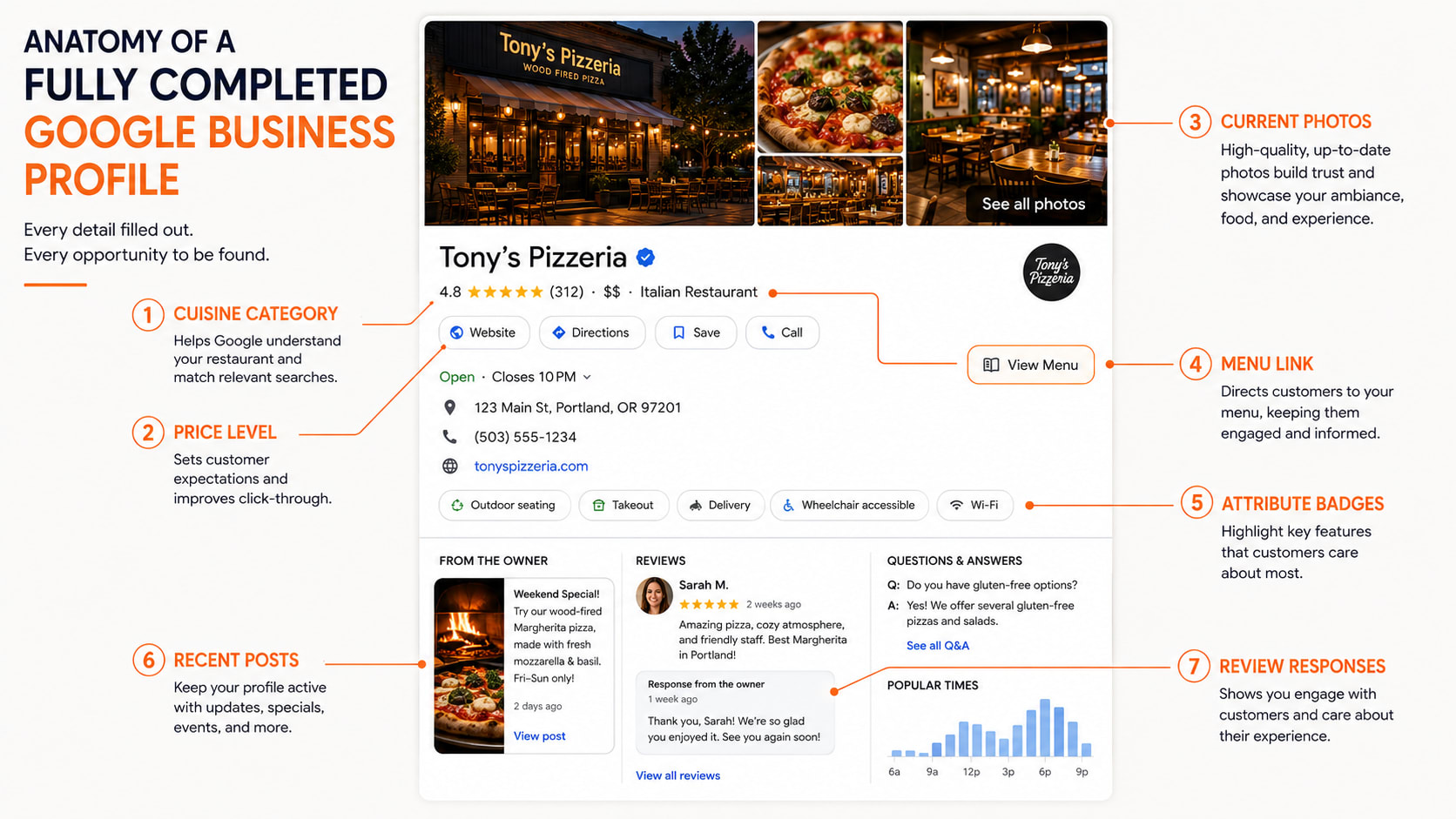
Google Business Profile optimization matters significantly for ChatGPT recommendations since ChatGPT with live search often pulls restaurant information from Google's business listings and search results.
Complete every available field in your Google Business Profile. Restaurant category, cuisine types, price level, attributes (delivery, takeout, dine-in), and operational hours provide structured data that ChatGPT can easily parse and match to user requirements.
Upload current, high-quality photos that accurately represent your restaurant. ChatGPT may use image information and photo context to understand restaurant atmosphere and style when making recommendations.
Maintain current posts and updates that signal active operation. Regular Google posts about specials, menu changes, or events indicate to ChatGPT's search integration that your restaurant is currently operating and engaged.
Respond to reviews professionally to demonstrate active management and customer service quality. ChatGPT may consider review response patterns when evaluating restaurant reliability and customer satisfaction.
Use accurate menu links that connect to current, accessible menu information. ChatGPT needs to verify menu details and pricing when making specific dining recommendations.
Add relevant attributes like wheelchair accessibility, outdoor seating, Wi-Fi availability, and payment methods. These details help ChatGPT match your restaurant to users with specific requirements.
Remember that Google Business Profile optimization serves both ChatGPT's live search capabilities and general search visibility that contributes to your restaurant's overall online footprint.
What makes an effective llms.txt file for restaurants?
An llms.txt file provides direct, structured information that AI systems can easily read and understand about your restaurant. This file format specifically targets AI consumption rather than human readability.
Restaurant overview section should include your establishment's name, location, cuisine type, and brief description of what makes you distinctive. Keep descriptions factual and specific rather than promotional.
Menu highlights section presents key dishes, specialties, and price ranges in a format AI systems can quickly parse. Include signature items, popular dishes, and any unique offerings that distinguish your menu.
Practical information section covers hours, contact information, reservation policies, seating capacity, and services offered. This operational data helps AI systems make practical recommendations based on user needs.
Atmosphere and experience section describes dining room style, typical customers, noise level, and appropriate occasions. This context helps ChatGPT recommend your restaurant for suitable situations.
Location and access details include neighborhood context, parking information, public transit access, and nearby landmarks. Geographic context improves location-based recommendation accuracy.
LLMenu can generate optimized llms.txt files automatically from your existing restaurant information, ensuring proper formatting and comprehensive coverage of details that AI systems prioritize.
The llms.txt file should be hosted on your restaurant's website at a predictable location where AI systems can find and access it easily.
How should you structure your restaurant website for AI discovery?
Website structure significantly impacts how effectively ChatGPT can understand and recommend your restaurant. AI systems scan websites differently than human visitors, requiring optimization for machine readability.
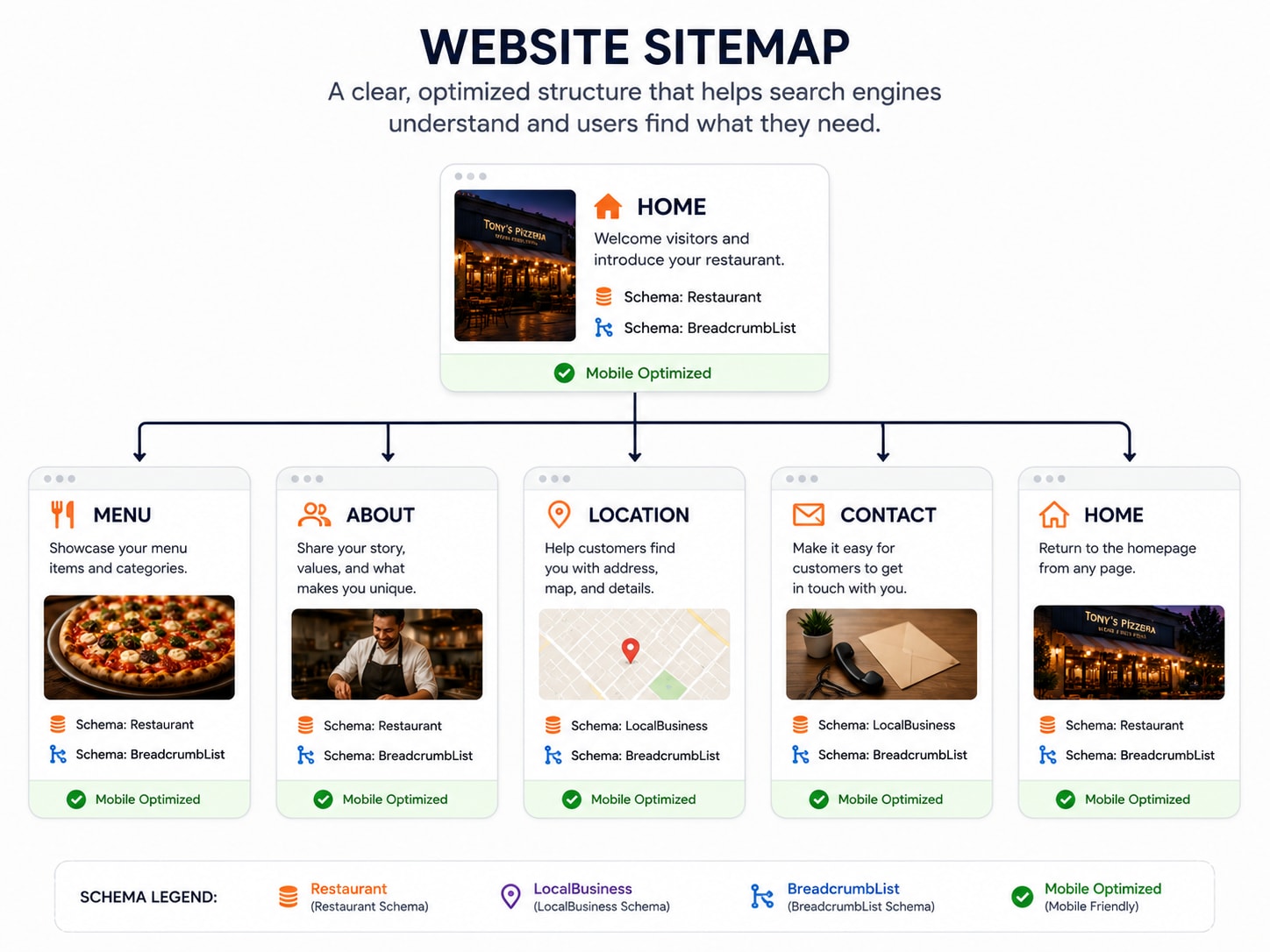
Clear navigation with standard page types helps AI systems find relevant information quickly. Standard pages like "Menu," "About," "Location," and "Contact" follow patterns AI systems recognize and can navigate efficiently.
Structured menu presentation with clear categories, dish names, descriptions, and prices makes menu information accessible to AI parsing. Avoid image-only menus or complex layouts that AI systems struggle to interpret.
Comprehensive "About" section should include restaurant history, chef background, cuisine specialties, and what makes your establishment unique. This contextual information helps AI systems understand when to recommend your restaurant.
Location and contact page with complete address, phone number, hours, and directions provides the practical information AI systems need for location-based recommendations.
Schema markup implementation using structured data helps search engines and AI systems understand your content more accurately. Restaurant schema can identify cuisine types, price ranges, review ratings, and operational details.
Fast loading and mobile optimization ensures AI systems can access your website content efficiently when gathering information for recommendations.
The goal is creating a website that both humans and AI systems can easily navigate to find accurate, current information about your restaurant.
What role do reviews play in ChatGPT restaurant recommendations?
Customer reviews across platforms like Google, Yelp, and social media contribute to ChatGPT's understanding of your restaurant's quality, characteristics, and customer satisfaction patterns.
Review content matters more than ratings alone. ChatGPT analyzes what customers specifically say about food quality, service, atmosphere, and value rather than just aggregating star ratings.
Consistency across review themes helps ChatGPT develop confidence in restaurant characteristics. When multiple reviews mention the same positive attributes, AI systems treat those as reliable indicators.
Recent review activity signals current operational status and quality maintenance. Restaurants with ongoing customer feedback appear more active and reliable to AI recommendation systems.
Professional responses to reviews demonstrate active management and customer service commitment. ChatGPT may factor owner responsiveness into recommendation decisions, particularly for service-oriented queries.
Authentic review patterns perform better than obviously fake or promotional content. AI systems increasingly recognize and discount artificial review activity.
Specific details in reviews help ChatGPT understand when your restaurant fits particular user needs. Reviews mentioning specific dishes, dietary accommodations, or service features provide context for targeted recommendations.
Encourage genuine customer reviews while focusing on providing excellent experiences that naturally generate positive feedback rather than trying to manipulate review content.
How can you track ChatGPT recommendation performance?
Monitoring your restaurant's ChatGPT recommendation frequency requires direct testing since traditional analytics don't capture AI recommendation data.
Regular query testing provides the most reliable performance measurement. Ask ChatGPT for restaurant recommendations using various search terms relevant to your business: location-based queries, cuisine searches, occasion-specific requests.
Query variation testing reveals how consistently your restaurant appears across different search contexts. Test with different neighborhoods, price ranges, dietary restrictions, and dining occasions to understand recommendation patterns.
Competitive monitoring shows how your visibility compares to similar restaurants in your market. Include competitor names in test queries to understand relative recommendation frequency.
Geographic testing from different locations helps assess how ChatGPT's location-based recommendations perform across your service area.
Timing analysis tracks whether recommendation frequency changes over time as you implement optimization strategies or as ChatGPT's data sources update.
Customer inquiry tracking at your restaurant can reveal when ChatGPT recommendations drive actual foot traffic. Simple questions during seating or ordering help identify AI-driven customers.
Most restaurants find that building ChatGPT visibility takes consistent effort over several months rather than immediate dramatic results.
What common optimization mistakes should you avoid?
Several approaches that seem logical for ChatGPT optimization can actually hurt recommendation performance by creating confusion or triggering spam detection.
Information inconsistency across platforms creates conflicting signals that may cause ChatGPT to avoid recommending your restaurant rather than risk providing inaccurate information. Ensure hours, addresses, phone numbers, and basic details match everywhere.
Keyword stuffing in business descriptions may trigger AI spam filters. Focus on natural, helpful descriptions rather than cramming optimization keywords into your content.
Fake or incentivized reviews increasingly get detected and discounted by AI systems. Build genuine customer feedback rather than attempting to manipulate review content.
Outdated information signals operational problems that reduce recommendation confidence. Keep menu links, hours, and contact information current across all platforms.
Generic descriptions make it difficult for ChatGPT to understand what distinguishes your restaurant. Avoid vague terms like "great food" in favor of specific characteristics and specialties.
Neglecting mobile optimization can prevent ChatGPT from accessing your website content effectively when gathering information for recommendations.
Ignoring local SEO basics means missing opportunities for location-based recommendations that drive significant restaurant traffic.
Focus on providing accurate, helpful information consistently rather than trying to game ChatGPT's recommendation algorithms.
What other AI platforms should restaurants consider?
While ChatGPT receives significant attention, other AI assistants also influence restaurant discovery and may require slightly different optimization approaches.
Claude tends to emphasize detailed explanations and contextual appropriateness in restaurant recommendations. Ensure your restaurant information includes sufficient context about atmosphere, appropriate occasions, and specific features.
Perplexity relies heavily on real-time search and often cites specific sources for recommendations. Maintain active, current online presence across platforms that Perplexity searches.
Google's AI assistant integrates deeply with Google's business data and local search results. Strong Google Business Profile optimization benefits both ChatGPT and Google AI recommendations.
Voice assistants like Alexa and Siri increasingly handle restaurant discovery queries. Ensure your restaurant appears in voice search results by optimizing for conversational query patterns.
The fundamentals of accurate business information, consistent online presence, and clear restaurant characteristics benefit discovery across all AI platforms rather than requiring platform-specific optimization strategies.
Get started today by creating your llms.txt file with LLMenu, then systematically auditing and updating your business listings across major platforms. Most restaurants can complete basic AI discovery optimization within a few hours of focused effort.
Frequently Asked Questions
How long does it take to see results from ChatGPT optimization? Most restaurants begin appearing in ChatGPT recommendations within 2-4 weeks of implementing comprehensive optimization. Full performance typically develops over 2-3 months as AI systems incorporate updated information.
Do I need to pay for ChatGPT optimization services? Basic optimization using Google Business Profile, website updates, and manual llms.txt creation requires no paid services. Specialized tools like LLMenu can accelerate the process but aren't essential for basic visibility.
How often should I test ChatGPT recommendations for my restaurant? Weekly testing with 3-5 different queries provides good performance tracking without being excessive. Focus on queries most relevant to your restaurant's target customers and location.
What's most important: reviews, website content, or business listings? All three matter, but consistent business listings across platforms provide the foundation. Focus on accuracy and completeness in basic business information before optimizing other elements.
Can I get penalized for over-optimizing for ChatGPT? ChatGPT doesn't penalize restaurants for optimization, but artificial content (fake reviews, keyword stuffing) may reduce recommendation confidence. Focus on authentic, accurate information rather than manipulation tactics.